
 Sasmita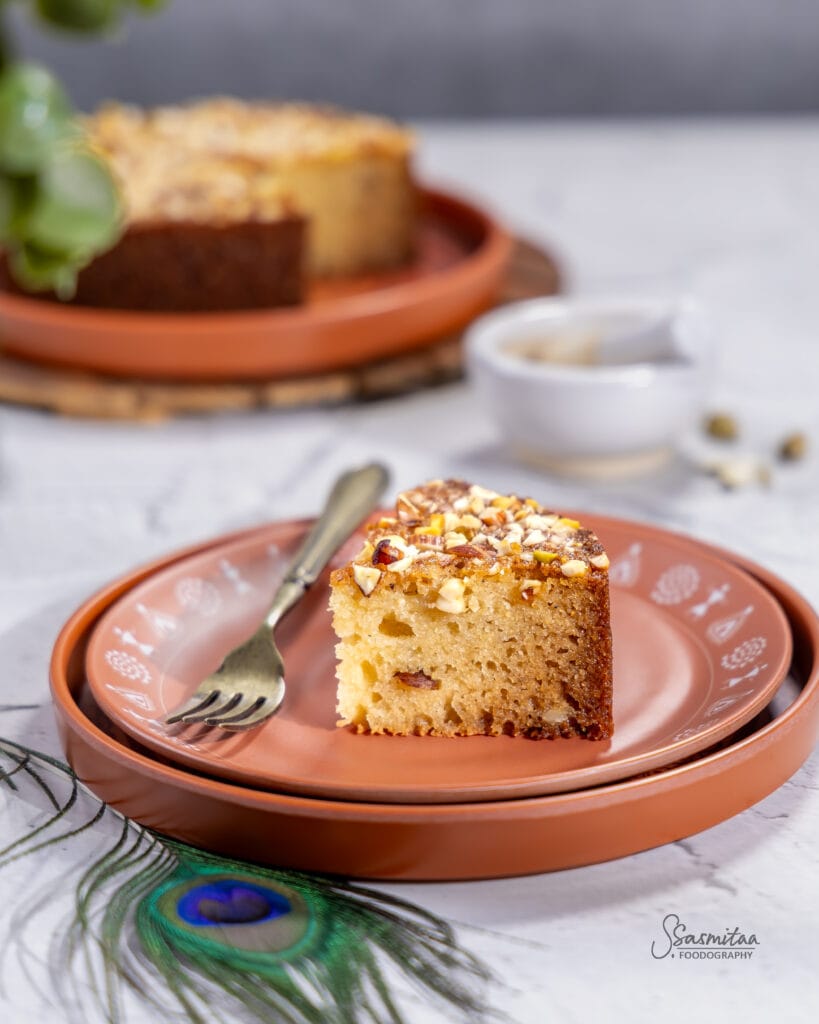
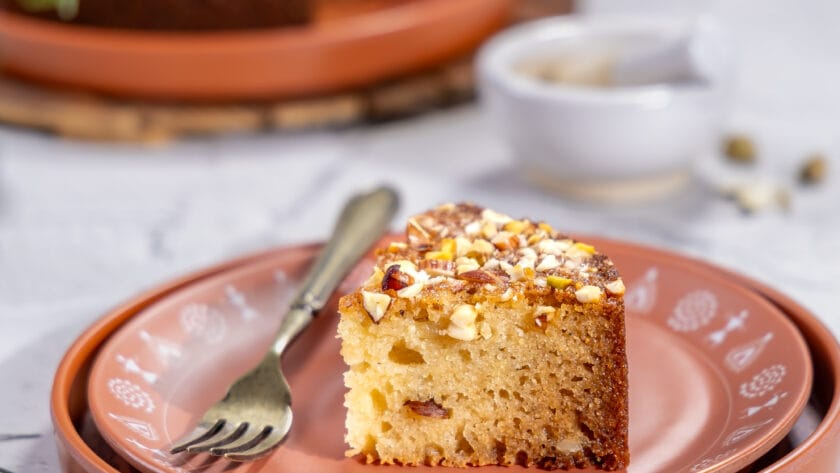
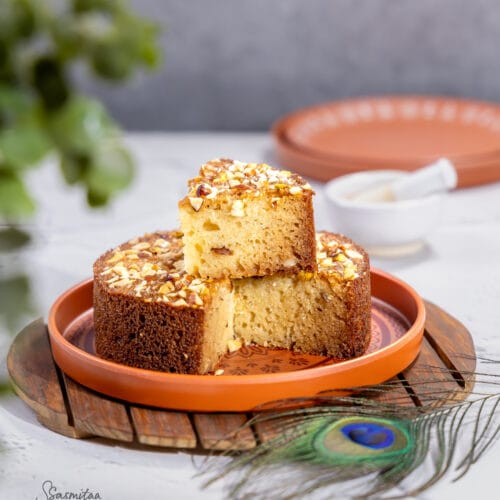
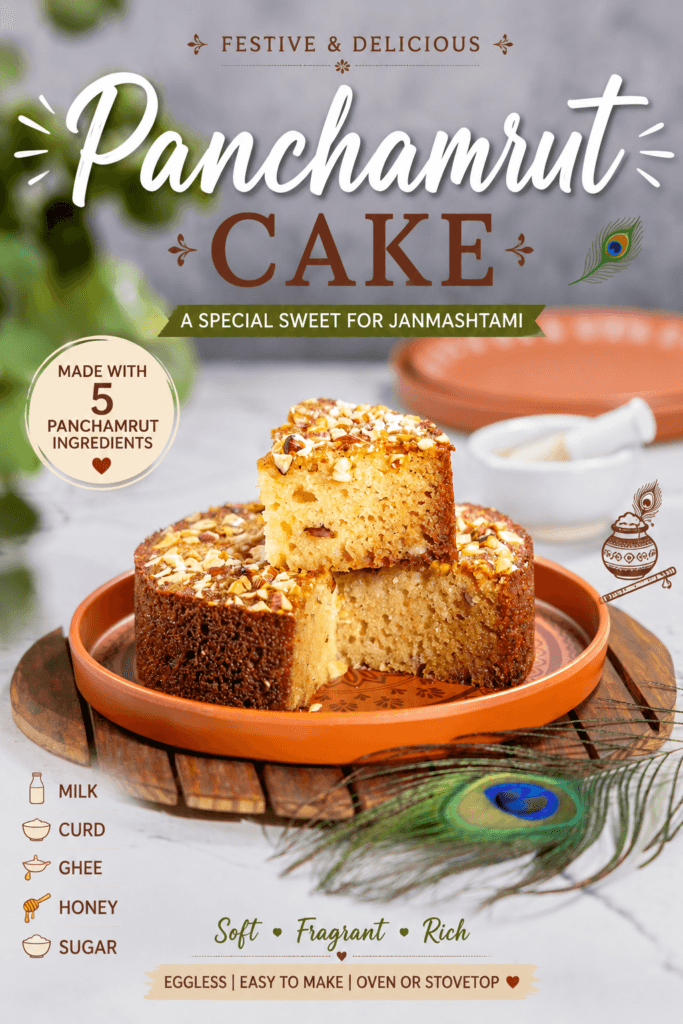
Panchamrut Cake is a festive eggless cake inspired by the sacred flavours of Panchamrut, the traditional five-ingredient offering made with milk, curd, ghee, honey and sugar / jaggery. With the goodness of these ingredients, fragrant cardamom and crunchy nuts, this cake is a delicious way to bring traditional flavours to your Janmashtami celebrations.
Soft, rich and mildly sweet, this sooji-based cake is easy to prepare and can be baked in an oven or cooked on the stovetop. Whether you are looking for a special Janmashtami sweet or simply want to try something different with familiar Indian ingredients, this Panchamrut Cake makes a lovely festive treat.
What is Panchamrut?
Panchamrut, also spelled Panchamrit, combines five traditional ingredients: milk, curd, ghee, honey and sugar.
The word Panchamrut comes from Panch, meaning five, and Amrut, meaning nectar. People prepare this auspicious mixture for puja and other religious occasions.
The word Panchamrut comes from Panch, meaning five, and Amrut, meaning nectar. These five ingredients come together to make an auspicious preparation that is offered during puja and other religious occasions.
Panchamrut has a special place in many Hindu rituals and is also associated with celebrations of Lord Krishna’s birth during Janmashtami.
This cake takes inspiration from those five ingredients and transforms their familiar flavours into a festive dessert. It is not traditional Panchamrut, but rather a cake inspired by its ingredients and their significance.
Why make Panchamrut Cake for Janmashtami?
Janmashtami is a beautiful celebration filled with devotion, colourful decorations and festive food. Since milk and dairy-based preparations are closely associated with Krishna’s childhood stories and many Janmashtami offerings, a dessert inspired by Panchamrut fits naturally into the festive table.
Instead of making the usual sweets, this cake gives you a different way to celebrate. The combination of ghee, honey, milk, curd and sugar, along with cardamom and nuts, gives the cake a distinctly Indian flavour.
It is also eggless, making it suitable for families who prefer vegetarian festive bakes.
Why you will love this Panchamrut Cake ?
- You can make this cake without eggs.
- It brings the five flavours of Panchamrut into a festive dessert.
- Simple pantry ingredients make this recipe easy to follow.
- Ghee and cardamom give the cake a wonderful Indian aroma.
- Sooji adds a lovely texture where as Nuts add a delicious crunch.
- You can bake the cake or cook it on the stovetop.
- It makes a lovely Janmashtami dessert.
Ingredients for Panchamrut Cake –
Milk :
Milk forms one of the five traditional Panchamrut ingredients. It adds moisture to the batter and helps create a soft cake.
Curd or yogurt :
Curd adds moisture and a gentle tang that balances the sweetness. It also helps create a soft texture in this eggless cake.
Use fresh, thick curd for the best results.
Cow ghee :
Ghee gives the cake richness and a wonderful aroma. It also contributes one of the traditional Panchamrut flavours to the recipe.
Honey :
Honey adds natural sweetness and brings another traditional Panchamrut ingredient into the cake. Adjust the quantity according to your preferred sweetness.
Sugar or jaggery :
Choose sugar or jaggery according to your preference. Sugar gives a lighter sweetness, while jaggery adds a deeper colour and earthy flavour.
Fine semolina or sooji :
Fine sooji forms the main dry base of the cake. It absorbs the milk and curd while the batter rests, which softens the semolina and improves the final texture.
Cardamom powder :
Cardamom adds a warm, fragrant flavour that works beautifully with ghee, honey and nuts.
Simply adjust the quantity according to your preference.
Baking powder and baking soda :
These are the leavening agents used to help the eggless cake rise and become lighter.
Almonds, cashews and pistachios :
Chopped almonds, cashews and pistachios add crunch and make the cake look extra festive. Mix some into the batter and sprinkle the rest over the top.
Watch the recipe video –
Prefer watching the recipe instead? 🎥
Watch the Panchamrut Cake recipe video to see how this festive eggless cake comes together, from preparing the Panchamrut-inspired batter to baking the cake and serving it.
Follow me on Instagram: @firsttimercook
I share easy vegetarian recipes, traditional Indian dishes, festive recipes and simple cooking ideas on my Instagram page.
▶️ Watch the recipe video below and see the complete process.
Don’t forget to save the recipe for your Janmashtami celebrations!
If you enjoy the recipe, save the reel, share it with your family and friends, and follow @firsttimercook for more recipes.
How to make Panchamrut Cake –
Prepare the wet ingredients :
In a mixing bowl, add ghee, sugar or jaggery, honey, curd, milk and cardamom powder.
Whisk everything together until the mixture becomes smooth and well combined.
If using jaggery, make sure it is well dissolved into the mixture.
Add the sooji :
Add fine semolina (sooji) to the wet mixture.
Mix gently until you have a smooth batter with no dry patches.
Rest the batter :
Let the batter rest for about 10 minutes.
This step is important because the sooji needs time to absorb the liquids. After resting, the batter may become slightly thicker.
Add the leavening agents :
Add baking powder and baking soda to the rested batter.
Gently fold them into the batter.
Add half of the chopped almonds, cashews and pistachios and mix gently.
Avoid overmixing at this stage.
Transfer the batter :
Grease a 6-inch cake tin with ghee or oil.
Pour the batter into the prepared tin and gently level the surface.
Sprinkle the remaining chopped nuts over the top.
Bake the cake :
Preheat the oven to 180°C.
Place the cake tin in the preheated oven and bake for approximately 30–35 minutes.
The cake is ready when a skewer or toothpick inserted into the centre comes out clean.
Cool and serve :
Take the cake out of the oven and let it cool in the tin for a few minutes.
Then carefully remove it from the tin and allow it to cool completely before slicing.
How to make Panchamrut Cake without an oven –
You can easily cook this cake in a heavy-bottomed kadhai or pressure cooker.
Preheat the kadhai or cooker before placing the cake tin inside. Place the cake tin carefully inside and cook on low flame for about 35–40 minutes, or until a skewer inserted into the centre comes out clean.
If using a pressure cooker, remove the whistle and gasket before using it for baking.
Cooking time can vary depending on the size and thickness of the cooking vessel, so always check the cake with a skewer before removing it.
Tips for making the perfect Panchamrut Cake –
- Use fine sooji: Fine semolina works best because it gives a smoother texture.
- Do not skip the resting time: Allowing the batter to rest gives the sooji time to absorb the liquid.
- Use fresh curd: Fresh curd works well and gives the cake a pleasant flavour.
- Adjust the sweetness: Adjust the quantity of sugar or jaggery according to your preference.
- Do not overmix: After adding the baking powder and baking soda, mix only until everything is combined.
- Use chopped nuts: Small pieces distribute more evenly throughout the cake and make each slice crunchy.
- Check before removing: Baking time can vary between ovens and stovetop setups. Always use a skewer to check whether the centre is cooked.
- Cool before slicing: Allow the cake to cool properly before cutting. This helps the cake hold its shape and gives cleaner slices.
How to serve Panchamrut Cake –
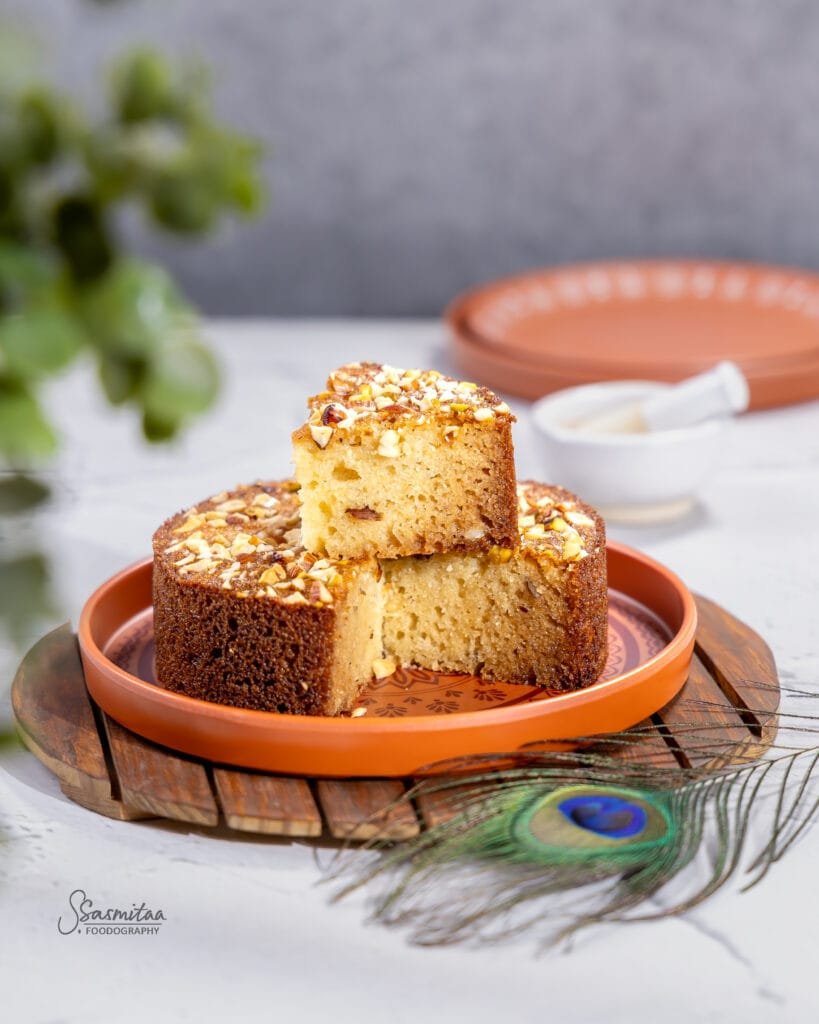
Serve the cake as it is, topped with the chopped nuts for a simple and elegant look.
For Janmashtami, you can serve it as part of your festive dessert spread along with other traditional sweets and offerings.
The cake tastes especially good with a cup of tea or coffee, making it suitable not only for the festive table but also for an afternoon treat.
How to store Panchamrut Cake –
Once completely cooled, store the cake in an airtight container.
It can be kept at room temperature for a short period. For longer storage, refrigerate it in an airtight container.
Allow refrigerated cake to come closer to room temperature before serving for the best texture and flavour.
💬 Frequently asked questions –
✦ Is Panchamrut Cake eggless?
Yes. This recipe is without eggs and uses curd, milk and other ingredients to create the cake batter.
✦ Can I use jaggery instead of sugar?
Yes, you can replace sugar with jaggery. Jaggery gives the cake a deeper colour and a richer, earthy sweetness.
✦ Can I make this cake without an oven?
Yes. You can cook the cake in a heavy-bottomed kadhai or pressure cooker on low flame. Cook it for about 35–40 minutes and check the centre with a skewer before removing it.
✦ Why is the batter rested before baking?
Resting the batter for about 10 minutes allows the sooji to absorb the milk and curd. This softens the semolina and helps improve the texture of the cake.
✦ Can I use only one type of nut?
You can add chopped almonds, cashews and pistachios. You can also use your favourite combination of nuts according to your preference.
✦ Can I make this cake for occasions other than Janmashtami?
Absolutely. The flavours are suitable for festivals, pujas, family gatherings and other celebrations. Its Indian flavours make it a lovely festive dessert.
Final Thoughts –
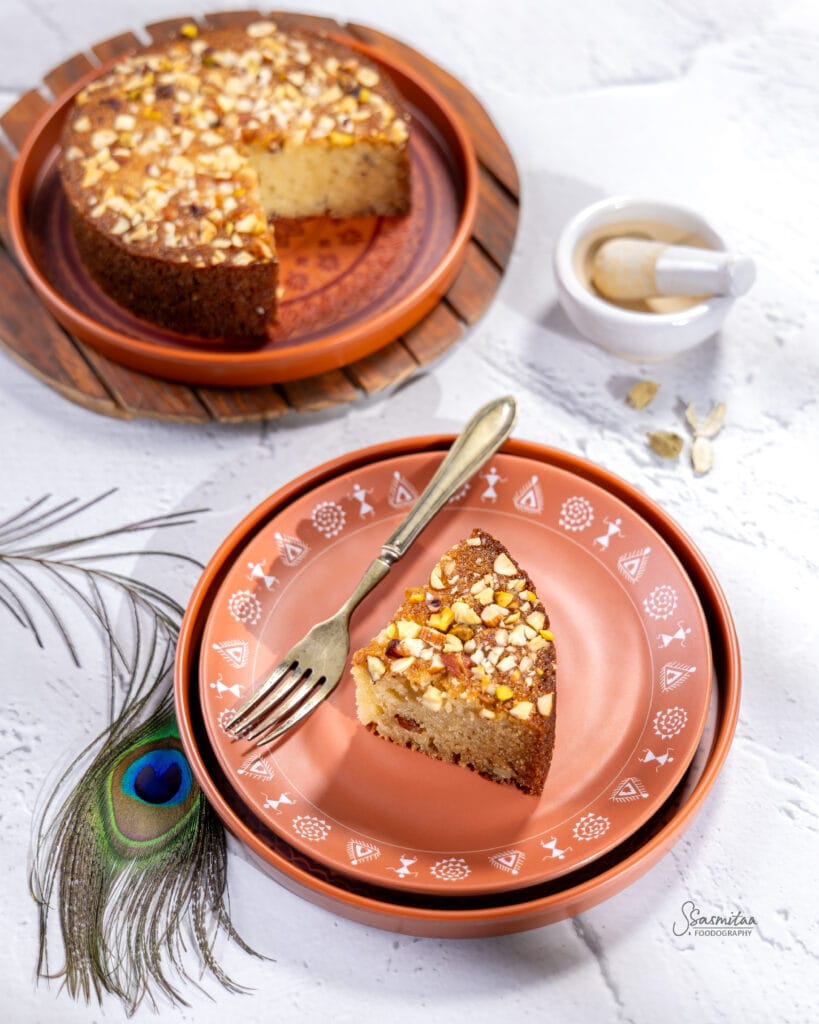
This Panchamrut Cake brings together traditional flavours in a simple and delicious festive dessert. Milk, curd, ghee, honey and sugar or jaggery give the cake its Panchamrut-inspired character, while cardamom and nuts add extra flavour and texture.
Whether you bake it in the oven or cook it on the stovetop, this eggless cake makes a lovely addition to your Janmashtami celebrations. Give this recipe a try and enjoy a homemade festive treat with your family and friends.
Recipe Card –
Panchamrut Cake Recipe for Janmashtami | Eggless Cake

Ingredients
- ½ cup milk
- ½ cup curd/yogurt
- ¼ cup cow ghee
- 2 tbsp to ¼ cup honey
- ¼ to ½ cup sugar or jaggery
- 1 cup fine semolina sooji
- ¼ to 1 tsp cardamom powder
- 1 tsp baking powder
- ½ tsp baking soda
- Chopped almonds cashews and pistachios, as required
Instructions
- Add ghee, sugar or jaggery, honey, curd, milk and cardamom powder to a mixing bowl.
- Whisk until smooth and well combined.
- Add fine sooji and mix to form a smooth batter.
- Rest the batter for 10 minutes.
- Add baking powder and baking soda and gently fold them in.
- Add half of the chopped nuts and mix gently.
- Pour the batter into a greased 6-inch cake tin.
- Sprinkle the remaining chopped nuts on top.
- Bake in a preheated oven at 180°C for 30–35 minutes, or until a skewer inserted in the centre comes out clean.
- Alternatively, cook in a preheated heavy-bottomed kadhai or pressure cooker on low flame for 35–40 minutes.
- Cool completely before removing from the tin and slicing.
- Serve and enjoy.
Notes
- The sweetness can be adjusted according to taste.
- Fine sooji is recommended for the best texture.
- Resting the batter for 10 minutes is important.
- Baking time may vary depending on your oven or stovetop setup.
- If using a pressure cooker, remove the whistle and gasket before baking.
- Allow the cake to cool completely before slicing.
📌 Pin it for later –
Loved this festive Panchamrut Cake? Save this recipe for Janmashtami and make this easy eggless cake with the traditional flavours of milk, curd, ghee, honey and sugar. It is a simple and delicious way to add an Indian festive touch to your dessert table.
📍 Follow ‘First Timer Cook’ on Pinterest 👉 https://www.pinterest.com/firsttimercook/

A beautiful bake Sasmitaa. Can’t believe you’ve used the traditional panchamrut ingredients to make a soft, moist and delish cake. Perfect for the upcoming festivities.
I had made a Panchamrut cake long back. Now when I came across your post, the wonderful images were so captivating, that plan to make this festive cake soon.
Love the idea of baking a cake and offering it to Kannaiya. Looks so good Sasmita
Delightfrul bake Sasmita. Love the spongy texture it carries.